
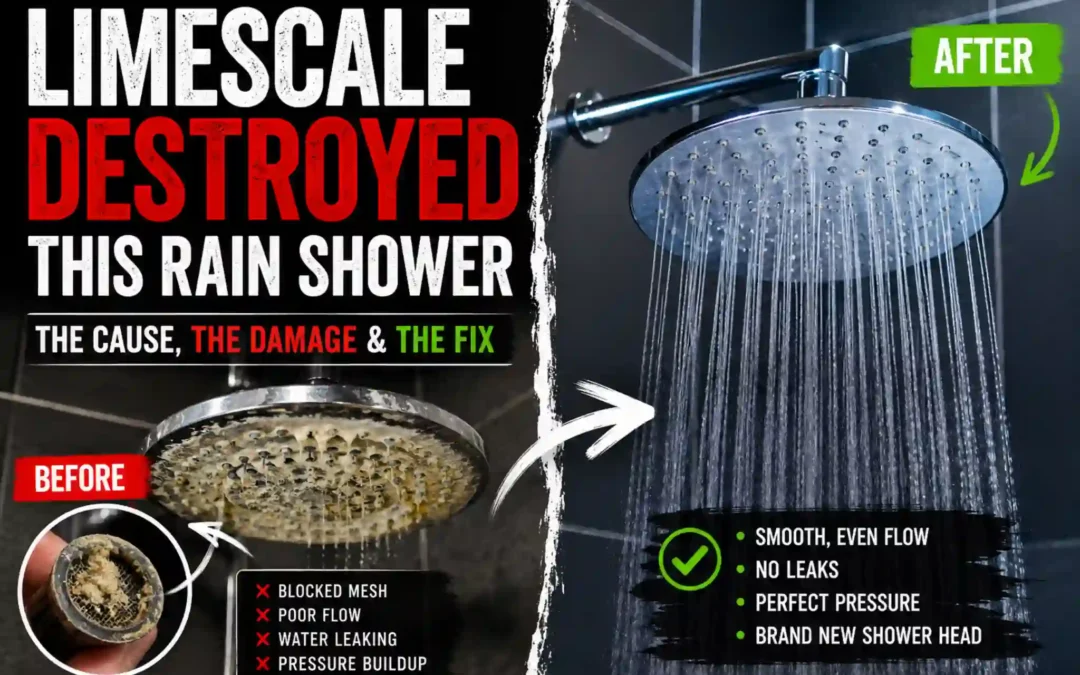
Modern rain showers are designed to deliver smooth, even water coverage. But when limescale and debris begin building up internally, performance can quickly deteriorate.
What often starts as slightly reduced pressure can eventually lead to water spraying sideways, leaking from the top of the shower head, or complete failure of the unit.
In this case, the issue was caused by severe internal limescale buildup blocking the shower head mesh and restricting water flow.
Watch the original repair short below:
What Happens When Limescale Builds Up Inside a Shower Head?
Hard water naturally contains minerals such as calcium and magnesium. Over time, these minerals collect inside shower heads, especially around internal filters and mesh screens.
As the buildup becomes worse, water can no longer flow properly through the intended outlets. Pressure begins forcing water into weak points inside the shower head instead.
This can result in:
- Water spraying sideways
- Leaks from the top of the shower head
- Uneven spray patterns
- Reduced pressure
- Noisy or sputtering water flow
- Premature shower head failure
Inspection Revealed Severe Internal Blockage
Once the old rain shower head was removed, the cause became immediately obvious.
The internal mesh was heavily blocked with:
- Limescale deposits
- Mineral buildup
- Debris trapped inside the unit
Because the water pressure had nowhere to escape properly, it eventually forced water out through the top section of the shower head.
The Solution: Replacement and Restored Flow
After confirming the blockage, the damaged shower head was replaced with a brand new unit.
The improvement was immediate:
- Smooth water flow restored
- Even spray pattern returned
- Proper pressure distribution achieved
- No more leaks or sideways spraying
Sometimes cleaning can temporarily improve performance, but in cases with severe internal scaling, replacement is often the most reliable long-term solution.
How to Prevent Limescale Damage
If you live in a hard water area, regular maintenance can significantly extend the lifespan of your shower fixtures.
Helpful prevention tips include:
- Cleaning shower heads regularly
- Using descaling products periodically
- Removing and rinsing filters where possible
- Installing a water softening solution in severe hard water areas
- Addressing reduced pressure early before damage occurs
Do Not Ignore Early Warning Signs
If your rain shower begins leaking from the top, spraying unevenly, or losing pressure, there is usually an underlying blockage already developing inside the unit.
Ignoring the problem can eventually lead to complete shower head failure and additional plumbing issues.
Early inspection and replacement can often prevent bigger repair costs later on.