
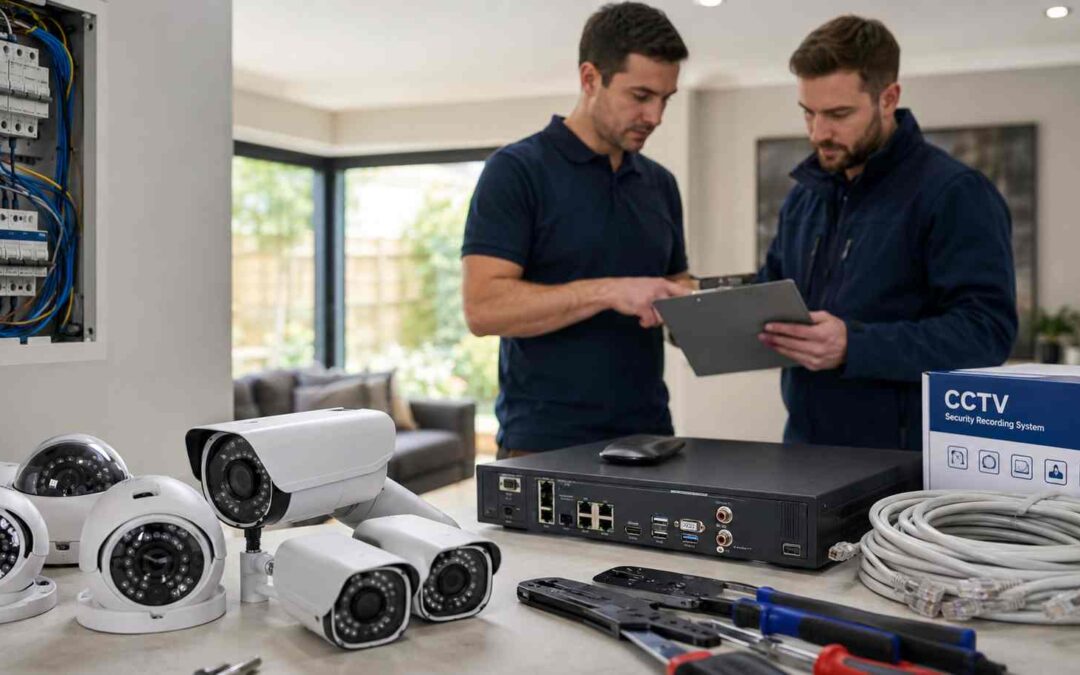
When a customer thinks about a CCTV installation, the first questions are usually simple ones. Where will the cameras go? How clear will the picture be? Can I see it on my phone? Will it cover the driveway, shop floor, entrance, garden, yard or communal area?
Those are important questions, but they are only part of the picture.
A reliable CCTV system depends on two sides working properly together: the installation work on site and the quality of the equipment being specified. Even a neat installation can disappoint if the cameras, recorder, cabling, storage or power requirements have not been considered properly. Equally, even good CCTV equipment can underperform if it is installed without attention to cable routes, electrical supply, network access and future maintenance.
That is why the right equipment supplier matters just as much as the right installer.
At TNG Services, we regularly see that the best CCTV outcomes come from good planning before the first camera is fixed to the wall. This includes choosing the right equipment, understanding the property, checking the practical installation conditions and making sure the system will still be suitable in the future.
A CCTV System Is Only as Strong as Its Weakest Part
A CCTV system is not just a set of cameras. It is a complete system made up of cameras, cabling, power, recording, storage, network access, software, mobile viewing and the physical installation itself.
If one part of that system is wrong, the whole result can suffer.
For example, a high-resolution camera may still produce poor results if it is positioned badly, installed with unsuitable cabling or connected to a recorder that is not properly matched to the system. A camera with good daytime performance may not be suitable for a dark side passage or poorly lit commercial yard. A recorder may work well at first but run out of storage too quickly if the number of cameras, resolution and recording settings have not been considered.
This is why CCTV installation should never be treated as a quick “fit and forget” job.
Before installation, the installer needs to understand what the customer actually wants the system to achieve. Is the aim to monitor a front door, protect a vehicle, record deliveries, cover a shop entrance, improve security for tenants or provide evidence in the event of an incident? Each of these situations may require a different approach.
The equipment supplier also plays a key role because product compatibility, availability and technical advice can affect the quality of the final installation.
Camera Choice Matters Before the First Cable Is Installed
Not all CCTV cameras are suitable for every property.
A small domestic driveway, a block of flats, a retail unit, a warehouse entrance and a commercial yard all have different requirements. The camera that works well in one setting may not be the right choice for another.
Important factors include:
- Resolution and image clarity
- Lens angle and field of view
- Night-time performance
- Motion detection requirements
- Indoor or outdoor use
- Vandal resistance
- Mounting position
- Lighting conditions
- Required recording time
- Whether the system needs future expansion
For example, a wide-angle camera may be useful for covering a general entrance area, but it may not provide enough detail for identifying faces or number plates at distance. A camera with strong night-time performance may be more important than simply choosing the highest megapixel rating. In some cases, upgrading the camera alone will not solve the problem if the recorder, cabling or network setup is also outdated.
This is where a professional installer and a knowledgeable CCTV supplier can make a real difference. The installer understands the property and the physical installation. The supplier understands the product range, compatibility and technical limitations. Together, that helps prevent the customer from ending up with a system that looks good on paper but does not perform properly in real use.
PoE, NVRs and Storage Are Not Just Technical Details
Many modern CCTV systems use IP cameras and PoE, which stands for Power over Ethernet. This means the camera can receive power and data through a network cable, helping to simplify the installation.
However, PoE does not remove the need for proper planning.
The system still needs to be designed around the number of cameras, cable routes, recorder capacity, network requirements and storage expectations. The NVR, or network video recorder, must be suitable for the number and type of cameras being installed. The hard drive must be large enough for the customer’s recording needs. The system must be set up so that remote viewing is practical and secure.
Storage is often overlooked. A customer may expect footage to be available for several weeks, but this depends on camera resolution, frame rate, recording schedule, compression, motion settings and the size of the hard drive. If these details are not discussed at the start, the customer may only discover the limitation after an incident has already occurred.
That is why CCTV specification should be handled properly before installation starts.
A professional CCTV installation is not only about getting a camera online. It is about making sure the whole system is fit for purpose.
Why Installers Benefit From a Specialist CCTV Trade Supplier
For installers, working with the right supplier can save time, reduce call-backs and improve the customer experience.
A basic supplier simply sells equipment. A good trade supplier helps installers make better decisions before the job reaches site. That support can include product advice, compatibility guidance, help with recorder selection, camera recommendations, technical support and availability of suitable replacement equipment.
For this reason, professional installers often prefer working with a specialist CCTV trade supplier such as FVS CCTV, where product choice and technical support can help ensure the right equipment is selected for the job.
This matters because CCTV installations are rarely identical. One customer may need a simple domestic system for a house. Another may need multiple cameras for a commercial unit, landlord property, communal entrance or external yard. Some customers need a new installation, while others need an upgrade to an existing system where old cameras, cabling or recorders may already be in place.
Having access to the right product knowledge can make those jobs more efficient and more reliable.
Good CCTV Planning Reduces Problems Later
Many CCTV problems begin long before the fault appears.
A camera may start losing signal because the cable route was poor. A recorder may become overloaded because the system was expanded without checking capacity. Night footage may be disappointing because the camera type was not suitable for the lighting conditions. Remote viewing may be unreliable because the network setup was not considered properly.
These problems can often be avoided with better planning.
At TNG Services, the planning stage can include checking:
- The areas that need to be covered
- The best camera positions
- Internal and external cable routes
- Power and network requirements
- Recorder location
- Existing CCTV equipment condition
- Whether the system needs to be upgraded or replaced
- Whether additional cameras may be needed later
- Access requirements for ladders, lofts, ceilings or external walls
- How the customer wants to view and manage footage
This practical assessment helps create a system that is easier to install, easier to use and easier to maintain.
It also helps avoid unnecessary work. In some cases, a full replacement may not be needed. A recorder upgrade, camera replacement or cabling improvement may be enough to improve the system. In other cases, the existing system may be too limited, and a new CCTV installation may be the better long-term option.
CCTV Upgrades Need the Same Care as New Installations
Many customers contact an installer because an existing CCTV system no longer meets their needs.
Common reasons include poor image quality, failed cameras, outdated recorders, limited storage, unreliable mobile viewing or blind spots around the property. Sometimes the system was installed many years ago and no longer provides the level of detail expected from modern CCTV equipment.
An upgrade can be a sensible option, but it should still be planned carefully.
The installer needs to check whether the existing cabling can be reused, whether the recorder is compatible with new cameras, whether the power supply is suitable and whether the customer’s expectations are realistic. Replacing one part of the system without checking the rest can lead to further issues.
For example, installing higher-resolution cameras may not deliver the expected benefit if the recorder cannot support them properly. Adding extra cameras may not be possible if the recorder has no spare channels. Improving external coverage may require new cable routes, different mounting positions or a stronger focus on night-time performance.
A good supplier relationship helps here too, because the installer can select compatible equipment rather than guessing.
Homes, Landlords and Businesses Have Different CCTV Needs
Domestic, landlord and commercial CCTV installations often require different approaches.
A homeowner may want a simple system covering the front door, driveway, garden or side access. A landlord may need coverage for a communal entrance, bin store, car park or shared access route. A business may need cameras for staff areas, customer entrances, stock rooms, delivery points or external yards.
Each setting brings different priorities.
For homes, the system should usually be discreet, practical and easy to use. For landlord properties, reliability and coverage of shared areas may be more important. For businesses, recording quality, storage time, access permissions and camera placement can be critical.
There may also be practical installation differences. Commercial premises may have longer cable runs, different construction materials, more complex access arrangements or a greater need for future expansion. Landlord and communal properties may require careful planning around shared spaces and existing wiring routes.
This is another reason why a CCTV installation should be designed around the property, not just the equipment list.
The Best CCTV Results Come From Joined-Up Thinking
A reliable CCTV system is the result of joined-up thinking.
The installer must understand the property, the customer’s goals and the practical installation conditions. The equipment supplier must provide suitable products, compatibility guidance and technical support. The customer must be clear about what they need the system to achieve.
When those parts work together, the result is a CCTV system that is more likely to perform properly, remain reliable and be easier to maintain.
When they do not, the system may still work on day one, but problems can appear later. Poor night footage, limited storage, unreliable remote viewing, weak coverage and upgrade difficulties are all common signs that the system was not specified correctly at the start.
That is why choosing the right installer and the right equipment supplier should be part of the same decision.
Need Help With a CCTV Installation or Upgrade?
TNG Services provides CCTV installation, CCTV upgrades, camera replacement, recorder upgrades, fault finding and improvements to existing CCTV systems for domestic, landlord and commercial properties.
Whether you need a new CCTV system installed or want to improve an existing setup, we can assess the property, discuss the areas you need to cover and advise on the most practical approach.
For CCTV installation support, visit our CCTV Installation Services page or contact TNG Services to discuss your requirements.